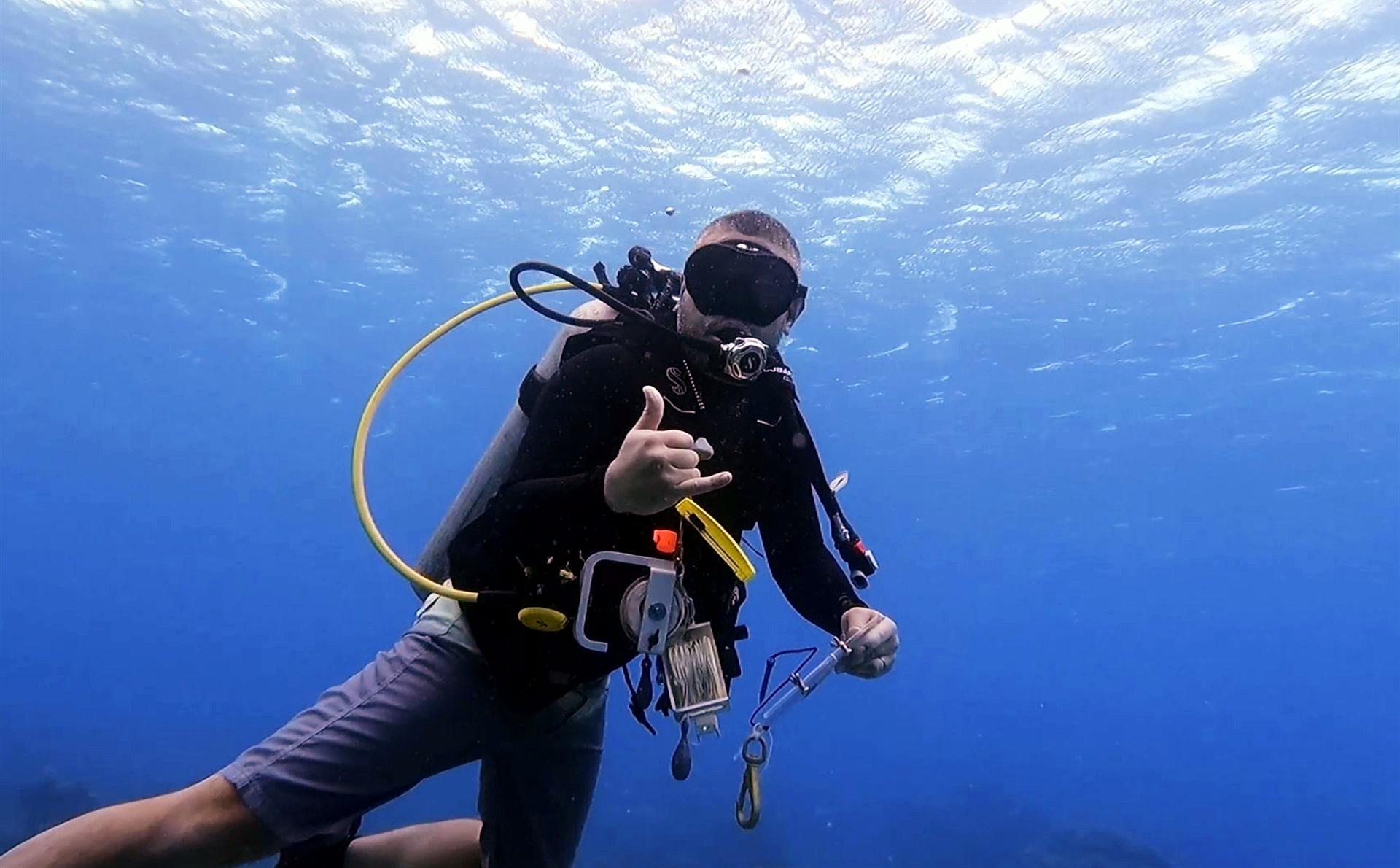
About CNMI CRI
Over two decades of cross-agency stewardship across the Northern Mariana Islands.
Founded in 2003 in partnership with NOAA’s Coral Reef Conservation Program, the Commonwealth of the Northern Mariana Islands (CNMI) Coral Reef Initiative (CRI) is a cross-agency effort dedicated to protecting and preserving the CNMI’s coral reefs and ensuring the responsible management of the resources they support.
Originally coordinated through the Bureau of Environmental and Coastal Quality’s Division of Coastal Resources Management (DCRM), the CRI transitioned in Fiscal Year 2025 to be housed under the CNMI Department of Lands and Natural Resources (DLNR) Office of the Secretary. CRI continues to collaborate closely with DCRM, the Division of Environmental Quality (DEQ), the Division of Fish and Wildlife (DFW), the Office of Planning and Development (OPD), NOAA, local nonprofits, and community partners.
In November 2024, Executive Order 2025-001 declared CNMI’s coral reefs as Critical Natural Infrastructure during the 49th U.S. Coral Reef Task Force Meeting in Saipan—reinforcing the Coral Reef Protection Act (Public Law 20-79) and recent legislative efforts to direct natural resource damages into the Coral Reef Restoration Fund.
Header photo: CNMI DLNR Coral Reef Initiative
Four Pillars of CNMI Coral Reef Conservation
Long-Term Marine Monitoring & Response Team
For over two decades, the MMRT has collected standardized biological data along 50-meter transects across Saipan, Tinian, and Rota—assessing both impacted reefs and relatively healthy reference sites to guide informed management.
- Benthic Cover: Types and abundance of coral, algae, and reef organisms.
- Coral Communities: Species composition, abundance, diversity, and colony size.
- Reef Fish: Species richness, abundance, size classes, and biomass.
- Algae & Seagrass: Macroalgae richness and lagoon seagrass bed composition.
- Marine Invertebrates: Sea cucumbers, sea urchins, giant clams, and Crown-of-Thorns Starfish (COTS).
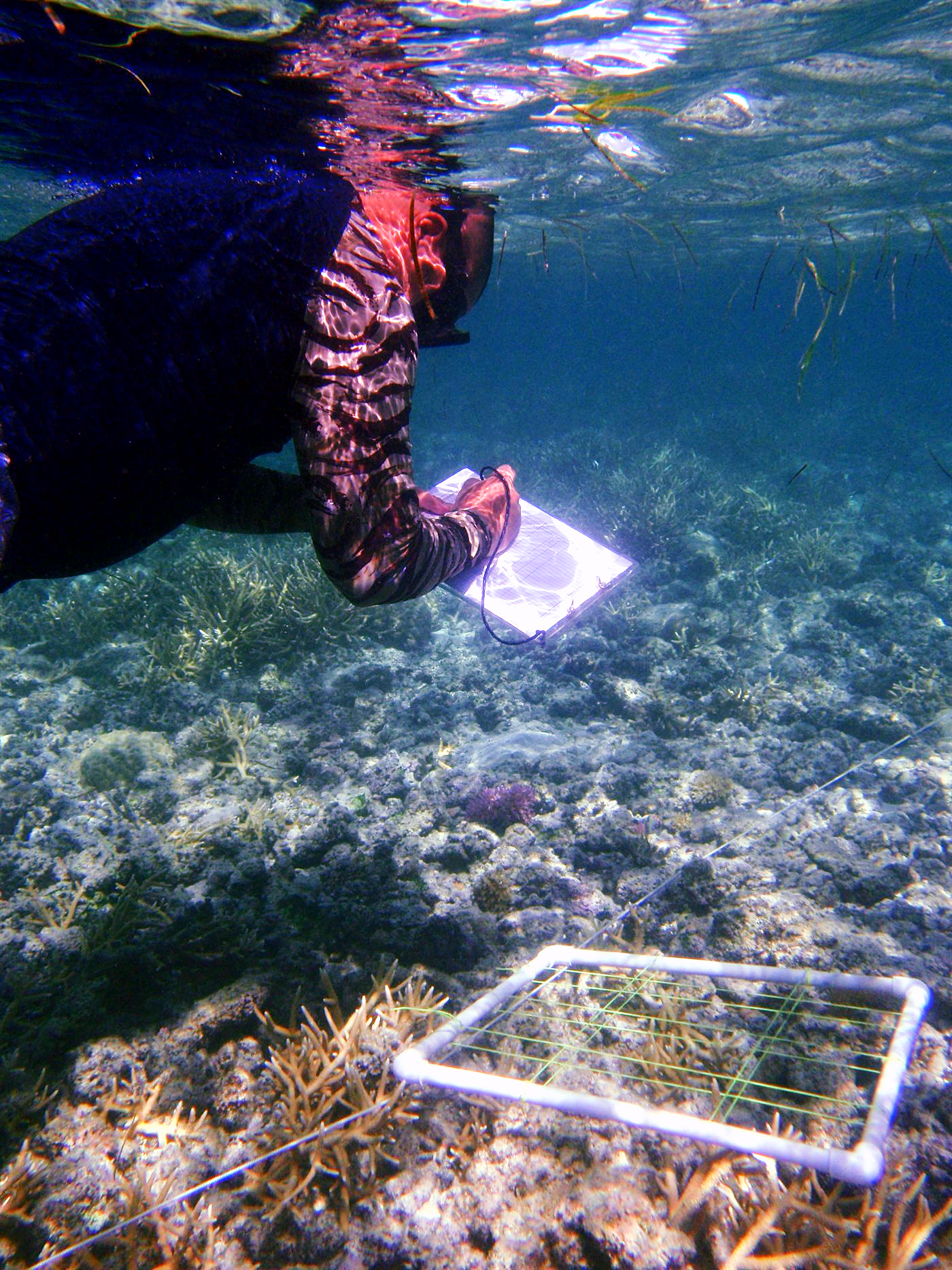
Marine Biology Technician John Iguel · CNMI DLNR CRI
Coral Restoration & Rapid Disturbance Response
Restoration is not only about putting corals back in the water—it is about coordinating people, science, nurseries, and long-term planning so damaged reefs have the strongest opportunity to recover.
- Ocean Nurseries: Maintaining the CNMI Government Nursery (8 tree structures and 2 tables actively holding coral fragments) and collaborating with partner nurseries in Saipan West Lagoon.
- Disturbance Response: Coordinating assessments and recovery for bleaching, coral disease, COTS outbreaks, storms, oil spills, vessel groundings (including the Paul Russ Final Restoration Plan), and invasive sponges.
- Working Groups & Training: Bringing together agencies, NGOs, dive operators, businesses, and volunteers.
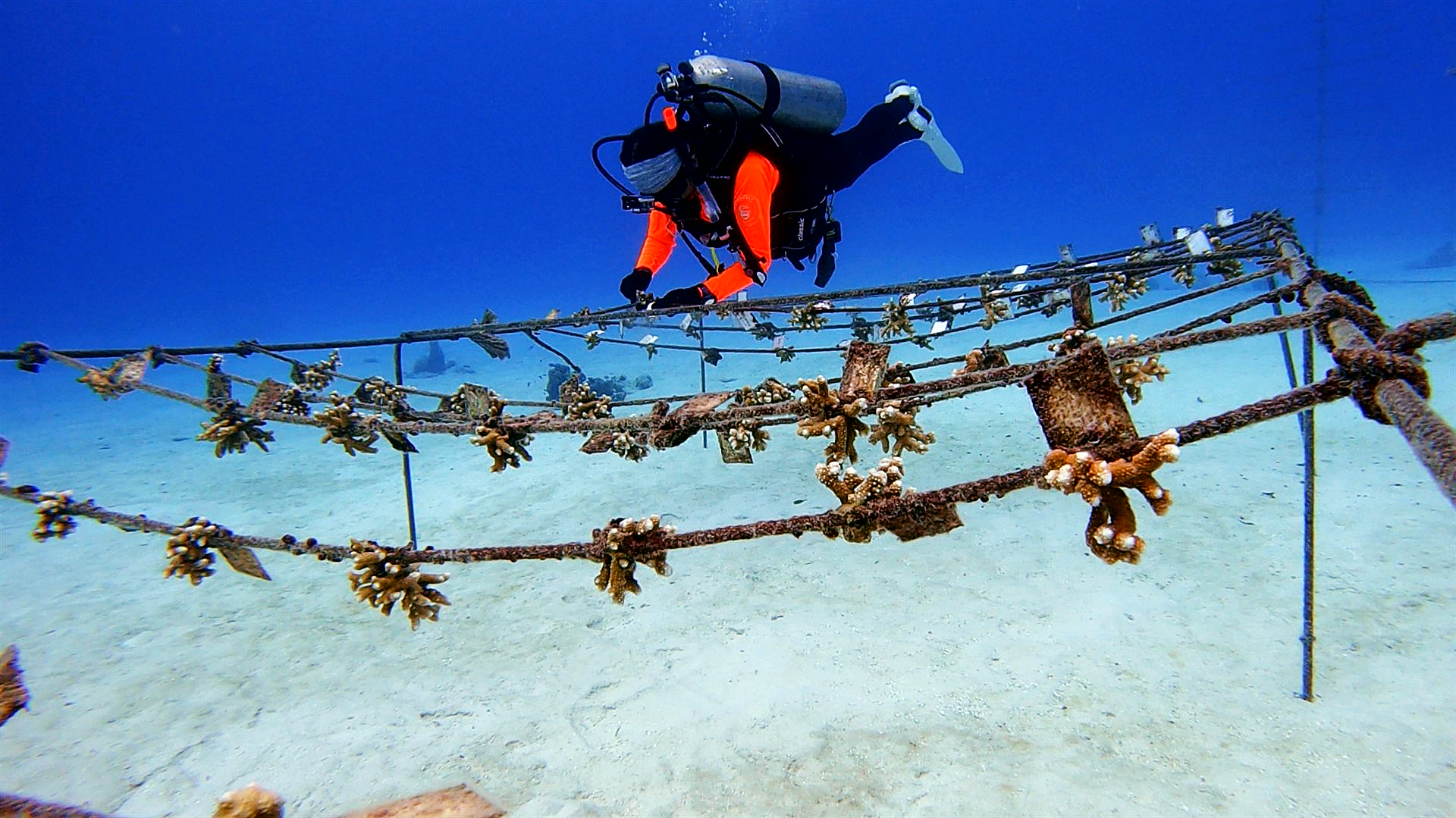
Coral Restoration & Response Coordinator Kalani Reyes · CNMI DLNR CRI
Coral Reef Policy Planning
Strong policies, regulations, and intergovernmental partnerships ensure that monitoring and restoration translate into lasting protection for reefs, fisheries, and coastal communities.
- Science-to-Policy Alignment: Reviewing regulations and supporting legislation, management plans, and interagency agreements.
- Executive Order 2025-001: Supporting implementation of CNMI’s declaration of coral reefs as Critical Natural Infrastructure.
- Coral Reef Protection Act (PL 20-79): Advancing protections and restoration funding mechanisms alongside federal partners including the U.S. Coral Reef Task Force.
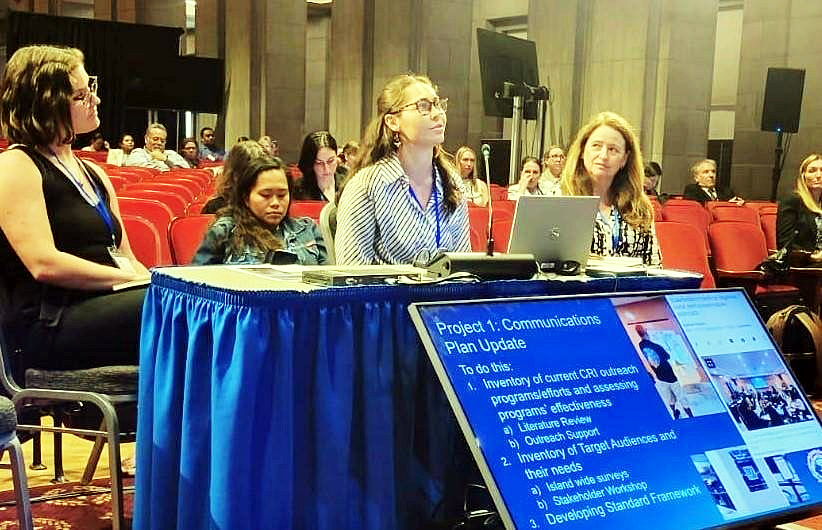
CNMI CRI representation at the U.S. Coral Reef Task Force Meeting · CNMI DLNR CRI
Outreach & Education
Our education mission is to inspire and inform the community about CNMI’s diverse nearshore coral resources, their cultural and economic benefits, current threats, and everyday conservation actions.
- Three Communication Goals: Increase understanding of reef value and condition; connect people with stewardship action; strengthen partnerships across practitioners and communities.
- Youth & Student Programs: Annual CNMI CRI Art Challenge, DCRM/CRI Summer Internship Program, and summer youth eco-camps.
- Community Events: Ocean Month outreach, Waves of Recovery at American Memorial Park, school visits, and multi-channel media (@CNMICRI).
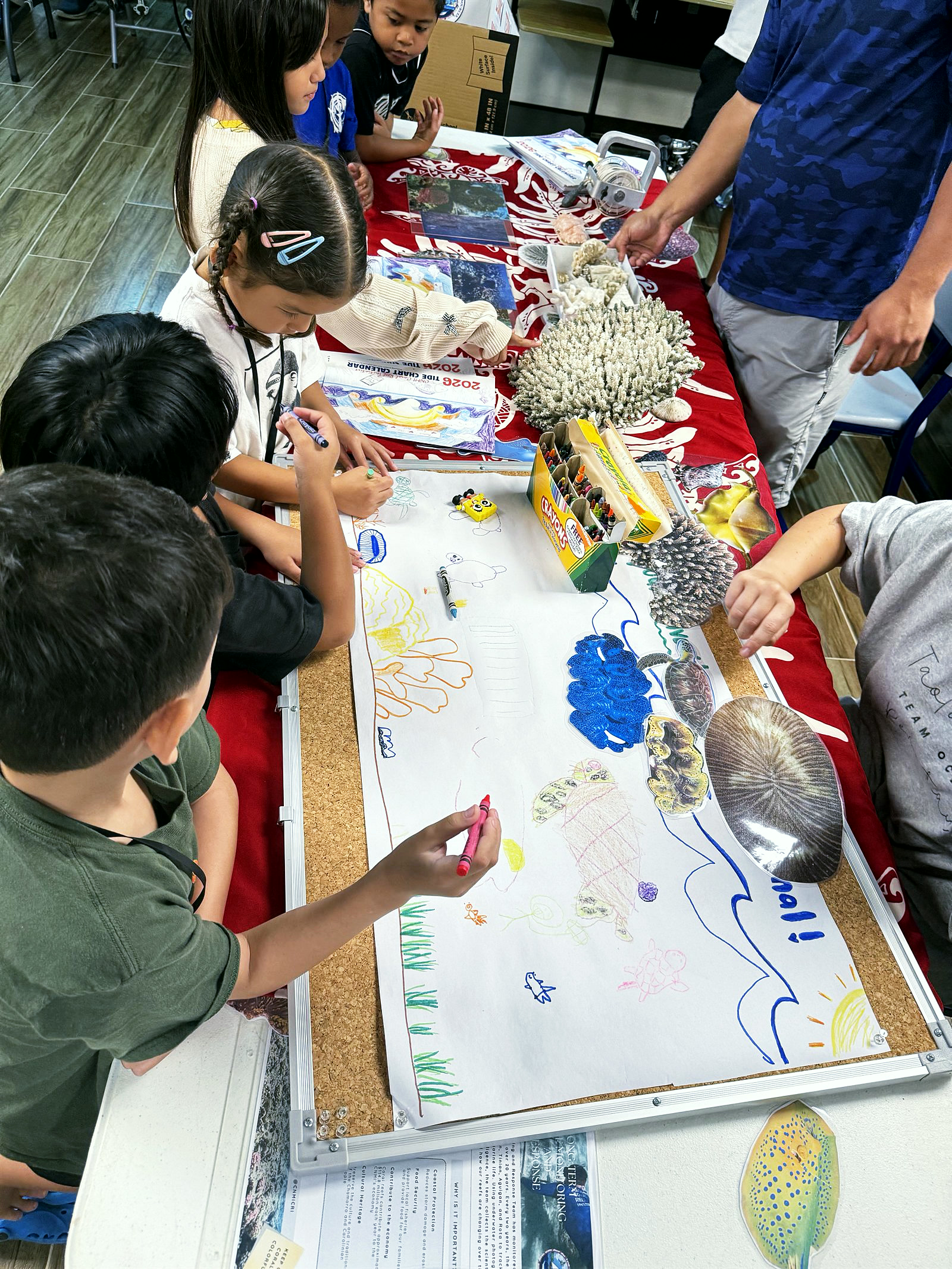
DYS Summer Youth Camp · CNMI DLNR CRI
Official Reports & Publications
Access official CNMI Coral Reef Initiative reports, restoration plans, legislation, and educational materials hosted by the CNMI Department of Lands and Natural Resources.
Report to Congress – Jurisdictional Coral Reef Report for the CNMI
2026 CNMI Coral Reef Initiative Art Challenge Packet
Paul Russ Final Restoration Plan
CNMI Coral Reef Restoration Flyer
Coral Reef Protection Act of 2017 (Public Law 20–79)
CNMI CRI Official YouTube Channel (@CNMICRI)
Coral Reef Initiative Team
CNMI Department of Lands and Natural Resources · Bldg. 1324, Ascencion Drive, Capitol Hill, Saipan, MP 96950 · Program Email: cnmicri@gmail.com